
Frania Zúñiga

Developer of a workflow able to reveal potential target proteins for prognosis, diagnosis, and therapy in blood plasma.
By conducting an in-depth N-glycoproteomic analysis of human blood plasma proteins, this workflow has demonstrated to be able to detect blood plasma proteins coming from tissue-leakage. Those proteins are four orders of magnitude less abundant than the typical glycoproteins observed by the direct analysis of blood plasma. The workflow will be applied to blood plasma samples derived from cohorts of clinical interest. This will help to discover alterations in the N-glycosylation related to specific physiological conditions on a more diverse range of blood plasma proteins.
Degree in Biochemical Engineering at the National Technological Institute of Mexico, campus Tepic. During the undergraduate program, she followed three research internships in the fields of Protein Evolution, Protein Engineering and Parasite Infection.
Degree in Master of Biochemical Sciences at the Institute of Biotechnology from the National Autonomous University of Mexico. The research was focused on the understanding of the effect of redox potential in the sialylation of a monoclonal antibody. This project achieved the generation of a baculovirus capable to express a redox potential sensor protein in the mammalian cell's Golgi Complex.

Early stage researcher in a multisectoral and interdisciplinary Ph.D. program since February 2018 in Magdeburg, Germany. Ph.D student at the Max Planck Institute for Dynamics of Complex Technical Systems, and glyXera GmbH, company specialized in High-Performance Glycoanalysis.
Progress on the project: in-depth N-glycoproteomic analysis of human blood plasma proteins
The glycoproteomic analysis of human blood plasma proteins poses several challenges: on the one hand, it is the mere number of glycoproteins with their corresponding glycoforms; on the other hand, it is the dynamic protein concentration range of more than ten orders of magnitude. Particularly, the low-abundant plasma proteins, can provide crucial information towards the understanding of diverse human traits, biomarker discovery or therapy development. After 3 years of work on this project, we have achieved:
- New methodologies for the separation of blood plasma proteins
- Development of 9 workflows combining diverse steps for conducting a deeper screening of the low-abundant blood plasma proteins
- High performance on explorative in-depth N-glycoproteomic analysis
In terms of professional training Frania has acquired knowledge in the following areas:
- LC-MS/MS analysis for proteomics and glycoproteomics
- Glycoproteomic data analysis
- Methods for pre-processing data.
- Epidemiology
- Statistics
- Scientific integrity
- Innovation and entrepreneurship
This project participated with a presentation in the online Ageing Workshop celebrated in February 2021 (brief video below). The Ageing Workshop integrated the latest knowledge in the topic of glycomics and health given by multiple disciplines. Our talk in this workshop communicate the potential of our novel method able to produce large datasets containing a new dimension of information: the N-glycoprofile of intact N-glycopeptides. One of the most impactful talks for our project was the one from Eline Slagboom. The Professor of molecular epidemiology talked how her team integrates multiple omics for revealing markers of traits related unhealthy ageing process.
Public engagement activities: Children workshop and street public engagement.
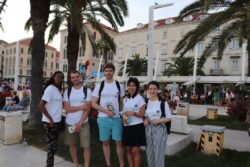
Public engagement was an important aspect of my participation as a Marie-Curie Fellow. For this purpose, my colleagues and me, we develop spontaneous talks with the general public on the street. During this chats, we talk about the recent scientific efforts on monitoring and approaching to a healthy elderly and how IMforFUTURE programme plans to contribute to this topic.
Would you like to know more? Please visit: MPI-Human Blood Plasma N-Glycoproteomics
"We are what we do for changing what we are". -Eduardo Galeano.