
Anna Carbó Meix
 Background
Anna performed her Bachelor’s degree in Biomedical Sciences at the University of Barcelona while the Bachelor’s thesis was completed at the University of Tübingen, and her Master’s degree in Neurosciences was also conducted at the University of Barcelona. In November 2017, she started her PhD in oncology, hematology and pathology at the University of Bologna as Marie Slodowska-Curie Early Stage Researcher under the supervision of Paolo Garagnani, and graduated in April 2021. During these three years, Anna investigated the determinants of healthy and unhealthy aging by focusing on type 2 diabetes mellitus (T2DM).
Research work
T2DM is an age-related disease characterized by chronic hyperglycaemia mainly explained by insulin resistance and impaired insulin secretion and strongly linked to dysregulation of carbohydrate, lipid and protein metabolism. T2DM is a worldwide increasing disabling disease – in 2013, the International Diabetes Federation estimated that 382 million adults suffered from T2DM and that by 2035 there will be 592 people affected. These worrisome numbers challenge biomedical research at identifying new biomarkers for the diagnosis. Therefore, the purpose of my study was to analyse and integrate different sources of phenomics (clinical) data – clinical history, anthropometrical measurements, biochemical parameters, cell counts and blood differential, and medication – with glycomics data in controls, prediabetics and diabetics cohorts, in order to 1) identify the major sources of variation in both data sets, 2) visualize trends or patterns in variables within- and between-omics (e.g. a combination of N-glycans highly correlated with some biochemical parameters), 3) determine whether the identified patterns ‘naturally’ cluster according to known biological sources or conditions (i.e. diagnostic T2D parameters, lipidic profile, liver, kidney, iron, coagulation biomarkers, or blood-related factors), 4) deeply study the fluctuation of clinical variables by sex and by groups (Ctrl/PreDiab/Diab), and 5) estimate an aging clock based on the clinical variables and N-glycans and apply it to assess whether the groups of prediabetic and diabetic patients show an accelerated aging as compared with control, and, within each group, whether there are differences between the two sexes. The analytical methods employed were two-way partial least squares (O2PLS) and regression.
T2D-Aging Clock
The most relevant results showed that biological age is i) significantly associated with chronological age in the three groups in both sexes; ii) can significantly predict the prediabetic and the diabetic status, and iii) is significantly associated with glycan 1, monocytes and red blood cell distribution width, independently of chronological age, sex, and diabetic status. In addition, age acceleration showed that diabetics are significantly biologically older than controls, in both sexes. Overall, this is the first aging clock capable of catching accelerated biological age in T2D.
IMforFUTURE opportunities
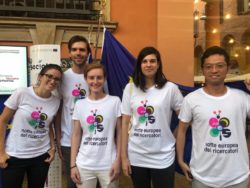 With regard to the project, for me IMforFUTURE has been an amazing opportunity for training and networking with other ESRs, as every one of us had a different domain and cultural background, thus we learnt many things from each other. In addition, the public engagement activities performed in Omiš and in Bologna were also very valuable as they provided a bridge between scientists and society, which is something lacking behind in most countries.
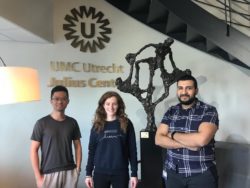
Last but not least, my four months secondment in Utrecht at Dr. Uh’s lab was really important to me, as it boosted my knowledge and skills in programming and statistics; in that regard, I am very thankful to Zhujie Gu.